Saturday, June 23, 2018

Russian Autotech

Russian Autotech

Greetings fellow Volkswagen owners. I'm certain most of you will agree with me that as huge as the Internet is, it's often hard or rather difficult to find exactly what you looking for. More often than not, this pertains to information  on automobiles of every kind but especially VW, Audi, SEAT and Skoda vehicles. Be this as it may, it certainly doesn't mean that these sought after help files or information even exist; though several "mechanical services web sites" allege that they have all the answers to you motoring problems, offering said information on a paid subscription basis. In reality, there is absolutely no guarantee that they actually have the answers you need to fix your Volkswagen,  Audi,  Skoda or SEAT. The worst would be after subscribing, that this is in fact the case. 


To make matters worse, since the diesel-gate scandal, Volkswagen AG hasn't been forthcoming with information needed by the general public in order to fix or maintain their Volkswagen, Audi, SEAT and Skoda vehicles. They've been far too busy dealing with the fallout of the "diesel dupe". In the US alone, Volkswagen has already paid over €25 billion in fines and litigation costs. Regardless of this, the Dieselgate scandal doesn't look like it's going to abate anytime soon. 

Notwithstanding, this hasn't deterred Volkswagen from extending a €1.75 billion deal with Russia's GAZ group until the year 2025, to produce VW, Audi and Skoda brand vehicles at their Gorky plant in Nizhny Novgorod Oblast, despite the collapse of the Russian ruble. Meanwhile the Kaluga plant in Russia continues to produce VW Tiguan, VW Polo and Skoda Rapid models, as well as build 1.6L gasoline engines. Russia has long been touted to become the largest single car market in Europe, eclipsing Germany’s 3.35 million new vehicles registered last year though currently, many Russians can't afford to buy new cars. 
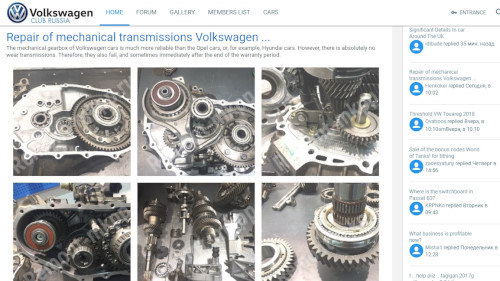


The most significant thing about this operation, is that several thousands of  Russians were empowered by VW and Audi and privy to their technology, to the point that they are willing to share it with whoever is willing to ask. So, all you peeps  who are having trouble with your VW's, Audi's, Skoda's and SEAT's and seek repair information, there are several Russian Websites that have hoards of free VW, Audi, SEAT and Skoda information that is not normally available on English / American websites. Below are a few links to Russian Websites that may have the information you are looking for. The images in this post are screen shots from these websites. Best of luck with your repairs.


The first site is  http://vwts.ru/  .... this is a Volkswagen Technical Site. All information is in Russian. Login to http://vwts.ru with your facebook account. If your Russian, like mine, extends to yes and no - "да (da) and (нет) net" respectively, then its best  to download  Google chrome's translation extension in order to make sense of the documentation. Some of the documents are in PDF format, mostly in  Russian and German but I've downloaded several written in English. This site also has a forum vwts.ru/forum/  but it appears to be insecure.


http://volkswagen-org.ru/ ... this site covers Golf 1 - Golf VI, Volkswagen Polo, VW jetta, VW Passat, VW Phaeton, VW Tiguan, VW Touran etc. It seems that its administrator has locked down new registrations, but if you manage to login, do so with the facebook icon.

https://www.vw-bus.ru .... this is a forum covering the VW combi T1 - T5, the LT, crafter, the VW Caddy and the Amarok, with members living in Russia, Belarus, Ukraine, Kazakstan, Baltic States and Europe.

https://www.drive2.ru/   ... this is a site of general interest but has good coverage of VW, Audi, Skoda and SEAT.


Thursday, November 9, 2017

Check Engine Light

Check Engine Light - aka MIL

Yesterday morning when I started my VW Polo highline she idled a bit rough but I never gave it another thought because it had been raining hard throughout the night with harsh howling winds accompanied by a  lightning storm. I summized it could have been caused by the moisture in the air but when I looked at the dashboard, I saw that the orange / amber Check Engine Light was on. I tried accelerating and looked at the CEL but it stayed on. Surprisingly the engine seemed sluggish and didn't revv as per normal. Looking through the rear view mirror, I could see a distinct amount of smoke spiraling behind the car.  This was worrying because the previous day,  the car drove perfectly normal and when I parked her, she idled just fine. 

The problem with the  Check Engine light, other that being on, is that it doesn't tell you anything about the nature of the problem nor whether it's  serious or not. All I knew is that something was wrong with my emission control system because of the excessive  smoke.   The Check Engine light is actually better known as the Malfunction Indicator Lamp (MIL) so in essence there was a malfunction detected by the ECU and there was no way to tell what it could be without plugging in my scan tool. So off I went and  fetched my laptop and my VCDS cable, plugged it into the under dash DLC connector and ran a scan and found 4 Faults - P1137, P1103, P1187, and a P0441.

CODE ERRORS

17545 - Fuel Trim: Bank 1 (Add)
P1137 - 002 - System too Rich - MIL ON

Considering the first error code describes the fuel system as to rich, by implication then there is too little air for proper combustion. So I popped the bonnet to check the MAF, and saw a whole load of leaves and pine nettles strewn all over the engine compartment and a hand full of them stuck to the inlet of the air filter, blocking the air flow. I then open the air filter, removed the leaves and nettles and all those that got sucked into the air filter housing when I initially started the car.

17595 - Linear O2 Sensor; Compensation Resistor: Open Circuit
P1187 -- 35-10 - - - Intermittent

The second error directed me to the O2 sensor because the ECU describes it as  "Open Circuit".  Stooping over the engine, my eye followed the exhaust pipe, from the manifold branch past the firewall and saw a pine tree branch under the car, so I kneeled down to pulled it out but is was stuck. The tree branch was right below the  Catalytic converter.  I then went inside to fetch a garden pruning scissors so that I could cut off the protruding twigs and free the branch. Just as I was cutting I saw a wire hanging from down from the Cat. It was the wire from the O2 sensor that broke off and I supposed this happened with the force of the wind blowing the branch under my Polo.

The road and my driveway was littered with pine comes and nettles that the wind blew from the park more than a 100 meters away.  Anyway, I striped of the O2 sensor wires which was screened and reconnected them with an electrical block connector. You know the ones were you have to push the wires into a brass ferrule from either end and screw it down with the two screws. That just worked perfectly.

17511 - Oxygen (Lambda) Sensor Heating; B1 S1: Performance too Low
P1103 - 35-10 - - - Intermittent

The third error also directed me to the O2 sensor that wasn't heating up. I suppose it's linked to the disconnected wire and I assume the ECU prevented this because it realized the O2 sensor was OC. 

16825 - EVAP Emission Control Sys: Incorrect Flow
P0441 - 35-10 - - - Intermittent

The fourth error I couldn't make sense of  though I've seen this error when the fuel tank cap wasn't properly closed. So I went to the the tank, took off the cap and inspected the rubber seal. But it all seemed fine, so I closed it. I them cleared the diagnostic trouble codes (DTC) stored in the engine control module and started and re-scanned the ECU for errors and it came back with "No fault code found ". I then started my Polo and all was well. She revved as before and the Check Engine light was off.


The Check Engine light has always been a major annoyance to both motorists and mechanics,  and as a consequence is often ignored. I even know of someone  who stuck a piece of black insulation tape over the orange / amber  Check Engine light to blot it out, rather than fix the problem. Be that as it may,  ignoring the Check Engine light could lead to expensive car trouble later, so it's important to promptly address problems indicated by it.

DIY mechanics should buy and inexpensive scan tool / DTC code reader  since they are all standardized to plug into the 16 pin DLC under the dashboard. It would empower them to  discuss the problem with their mechanic if they can't manage to solve it themselves. When Check Engine light comes on, it is more likely than not that your car car is releasing unburnt gasoline (hydrocarbons) and carbon monoxide  into the atmosphere and consume a lot more fuel than it actually should.  

The OBDII system was primarily designed to monitor the emission control system continuously so it can be said hat if you car passes "readiness" its a good indication that your car  engine is in good health.  

Some problems that can illuminate the Check engine Light.

A clogged air filter can trigger the Check Engine light.
A loose gas cap can trigger the Check Engine light.
A fault O2 sensor can trigger the Check Engine light.
A Mass air flow sensor problem can trigger the Check Engine light.
Perished Spark plug wires can trigger the Check Engine light.
A blown  Catalytic converter can trigger the Check Engine light.
Low oil pressure or overheating can trigger the Check Engine light.
Sporadic engine misfiring can trigger the Check Engine light.