Monday, August 22, 2022

Grand Theft Auto

Grand Theft Auto

Volkswagen (VW) motor vehicles are not only popular among car enthusiasts, they  are also very popular car among the first-time car-buying youth. That said, VW vehicles have also become most popular car among car thieves to steal.

<a href='https://www.freepik.com/photos/car-thief'>Car thief photo created by freepik - www.freepik.com</a>


According the Crime Statistics Report for the years 2020 and 2021 - released by the South African Police Service (SAPS)- motor vehicle theft in general has steadily increased since 2011. However, it is correct thinking to assume that thieves have a preference to certain make and model of car.  Case in point - both the VW Polo hatchback and VW Polo sedan are at a higher risk of being stolen than any other VW model and other manufacture's vehicles as a whole.  

VW Polo Hatchback

Since its release in 2018 the VW Polo Hatchback had become the most stolen cars in South Africa. By 2019 it was the most sold passenger vehicle; targeted by "chop-shops" -illegal garages that buy stolen cars - to disassemble them and sell their individual components for profit - aka midnight spares. 

The new VW Polo hatchback - front-wheel drive, 5 door with 5 seats, powered by a 2.0L TURBO 4 engine that outputs 147 kW of power and 320 Nm of torque costs roughly between R320K and R480K whereas a older model or one with  a lower capacity can sell for anything from R170 000 and R250 000 subject to millage and overall condition.

VW Polo Sedan

The VW Polo sedans comes in as either Trendline, Comfortline, Highline and are essentially the sedan version of the  VW Polo hatchback with and engine capacity of either 63 kW  of 77kW fetching a price between R270k and R350k.

Insurance

Loosing a vehicle of this calibre with such a pricetag can be really gruesome hence a condition of any hire-purchase agreement to keep the vehicle adequately insured but an anti hijack immobilizer and alarm system is also essential. Car insurance coupled to Life Insurance may also be highly advantagious.


Anti-theft Alarm, Remote Central Locking and Remote Central Locking are not standard features of all models but the all do come with an Immobilizer but without Automatic Door Lock. It is therefore feasible to invest in an anti-Blocker, anti-Signal, anti-Jammer engine immobilizer with vehicle tracking GPS tracker support and engine cut in preference of the factory fitted product.

Transponder detection

Since most later vehicles are fitted with receiver and transponders chips, stealing a car without having its corresponding key is quite difficult.  If the key isn't close to the steering column stalk that houses the receiver coil or not within key detection distance then engine will not start.  Thieves also resort to key re-programmers and signal grabbers to counteract new technologies like ‘push to start’ buttons installed in the later model vehicles.

<a href='https://www.freepik.com/photos/car-thief'>Car thief photo created by freepik - www.freepik.com</a>

Carjacking

So, in order for thieves to steal your car they would have to take it from you by force  - hijacking, a horrific experience. Most cars today are stolen that way by hijacking the driver. If the thieves don't have the matching ignition key, the immobilizes prevents them from starting it by inhibiting the starting process, hence they take the car from the driver with key by force -carjacking. 

Safety Tips to prevent a possible hijacking


Before getting into your car, look around for any any suspicious characters. Should they be around alert a friend, family member or neighbour, even get them to accompany you.

Hijackings are often than not planned, so be be vigalent and cognizant of vehicles following you even at a distance.

Jot down the number plates of vehicles that or that continually pop up on your daily travels and check against previous ones.

Report any s suspicious activity to your local neighbourhood watch or security company of police.

Make sure that you are not being followed before driving into your driveway where you could be cornered.

Alert someone at home before driving into your driveway, to come outside to observe if there are suspicious characters lurking about.

Always be aware and alert of your surroundings before getting out of your car.

Never stop or park your car in a way that you cannot get away from someone following you quickly. 

Be aware of any vehicle blocking your driveway as you pull into it. Honk your hooter constantly to alert neighbours. It may be sufficient to scare them off.


Thursday, February 24, 2022

The Most Common Car Problems

The Most Common Car Problems

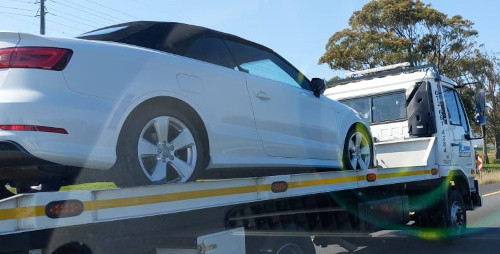
There was a time when car owners could easily service their own cars. Simply replacing points, plugs and condensors,  draining its oil and replacing its oil and oil filter normally put the car back on the road again. Those were the days when the most common roadside problem was a puncture or a snapped fan belt. Punctures were easily fixed with a replacement tyre from the trunk. All that was needed was some elbow grease applied to the jack, wheel brace and wheel nuts and you were on the road again. But today rollbacks are are integral part of motoring. Hundreds of cars are loaded up everyday on the road side.


VW Polo on a roll back going to workshop


The main cause of punctures was attributed to poor road surfaces, random metal objects and broken glass and to a lesser degree older tyre technology. Even though punctures were predominant, they were by no means exclusive to roadside breakdown because clutch plates and gearbox problems were also plentiful, as was running out of fuel.


Volkswagen Polo on a roll back

With the advent of newer cars, the race for the most fuel efficient and least expensive car was on. When fuel and air stoichiometrics were at its peak, car manufactures started producing cars with a 'Space Saver Biscuit Spare Wheel' which took several kilograms of weight out of the trunk, This made the car a tad lighter, slightly more fuel efficient and ever so slightly, cheaper to produce.

Today, almost a third of all new cars don't even have a spare wheel; instead they may be equipped with a can of self inflating puncture-repairing foam, or an electrical air compressor with some sealant kit to temporarily fix a flat tyre. Both options are evidently cheaper than a Space Saver Biscuit Spare Wheel and lighter.


However, believe-it-or-not, the more expensive cars today, are sold without  a spare wheel, instead they are fitted with “run-flats”. In a nut-shell, run flats are special pneumatic tyres, designed to resist the effects of deflation when punctured, yet enables the car to  be driven at reduced speeds of under 90 km/h for a distance of up to 80 km. The speed and distance of course to the nearest tyre repair shop, is subject to the type and quality of the run-flats.  So, once again the manufacturer saves the cost of supplying a spare wheel.

Car on rollback

Be that as it may, snapped fan belts  often causing the engine to overheat, sometimes resulted in a  blown  cylinder head gasket. Subsequently, the modern day electric radiator fan has totally supperceeded the belt driven fan and as a result, burst radiator hoses, corroded, leaking water pumps and welch plugs have  became the primary cause  of blown cylinder head gaskets. The other bugbear is oil leaks that weren't timeously attended to, currently trending as the most common cause of seized engines. 

With the abundance of electronics fitted into cars, the alternator  and its voltage regulator have  became a lot more more troublesome than ever before. Obviously due to the additional electrical load.  Alternator  problems are closely followed by starter issues when either its brushes or its  bendix reaches its end of life.   


Both types of problems have resulted in batteries being replaced prematurely and sometimes unnecessarily. Brakes and Turbos also give their fair share of problems, but none of these problems comes close to the new type of roadside breakdowns caused by the OBD-II system.

The most common cause of  breakdowns today, is the Electronic Power Control (EPC) light; not that the light is the cause of the problem. The Electronic Power Control (EPC) light is only an advisory light, drawing your attention to a possible malfunction or  pending problem or  already existing problems.


When the Electronic Power Control (EPC) light comes on, without the ESP or Check  engine light, the car is normally still driveable, even if it goes into limp mode. But when accompanied by the ESP and or CEL (check engine light) the car may refuse to start as its inhibited by the Electronic Computer Unit (ECU). 

When this happens, the only solution is to secure a rollback to fetch the car and take it either to your service agent / mechanic or your home, so that you can tend to the problem yourself. 

There is no way you'd be able to effect repairs to your car yourself without a OBD II scanner   that would direct you to, or confine your repair to a certain area of the engine. 

ODB-II problems not limited to VW.

Below are a few sample yet partial ODB II diagnostic scans  for Electronic Power Control (EPC) problems. 

This for a 7N0 - VW Passat.
Address 01: Engine (CDL)       Labels: 06F-907-115-CDL.clb
   Part No SW: 1P0 907 115 AB    HW: 8P0 907 115 B
   Component: 2.0l R4/4V TFSI     0020  
   Revision: 5BH20---    Serial number: 0000              
   Coding: 0303004C18070160

1 Fault Found:
008487 - Accelerator Position Sensor 2 (G185) 

               P2127 - 002 - Signal too Low


Electronic Power Control (EPC) problem  for a 1J - VW Golf.

Address 01: Engine Labels: 06A-906-032-AWP.lbl
Part No: 06A 906 032 RN
Component: 1.8L R4/5VT G 0001 
Coding: 07510

18047 - Accelerator Position Sensor 1/2 (G79/G185) 
            P1639 - 35-00 - Implausible Signal
18042 - Accelerator Position Sensor 2 (G185) 

            P1634 - 35-10 - Signal too High - Intermittent


Electronic Power Control (EPC) problem  for a 7L - VW Touareg 

Address 02: Auto Trans        Labels: 09D-927-750.lbl
   Part No: 09D 927 750 AN
   Component: AL 750 6A           0546  
   Coding: 0004153


1 Fault Found:
00777 - Accelerator Position Sensor (G79) 

            004 - No Signal/Communication - MIL ON


NB! The Automatic Transmission module and not the Engine Module detected this accelerator sensor problem.


Electronic Power Control (EPC) problem 1H - VW Golf/Vento III
Address 02: Auto Trans       Labels: 01M-927-733.LBL
   Controller: 01M 927 733 CT
   Component: AG4 Getriebe 01M    3363
   Coding: 00000
    

1 Fault Found:
00518 - Throttle Position Sensor (G69)

            16-10 - Signal Outside Specifications - Intermittent


NB! The Automatic Transmission module and not the Engine Module detected this accelerator sensor problem. Here the Throttle position sensor instead of the Accelerator sender is the cause of the problem.


Electronic Power Control (EPC) problem  for a 9M - VW Jetta IV.
Address 01: Engine Labels: 06A-906-032-AWP.lbl
Part No: 06A 906 032 RN
Component: 1.8L R4/5VT G 0001 
Coding: 07510

1 Fault Found:
18047 - Accelerator Position Sensor 1/2 (G79/G185

P1639 - 35-00 - Implausible Signal 


Electronic Power Control (EPC) problem  for a 8E - Audi A4.
Address 01: Engine Labels: 06C-909-559-ASN.lbl
Part No SW: 8E0 909 559 D HW: 8E0 909 059 
Component: JHM V3/9X G 0003 
Coding: 0016751

2 Faults Found:
18047 - Accelerator Position Sensor 1/2 (G79/G185) 
P1639 - 008 - Implausible Signal - Intermittent
18047 - Accelerator Position Sensor 1/2 (G79/G185) 

P1639 - 008 - Implausible Signal - Intermittent - MIL ON


Electronic Power Control (EPC)  for a 8P - Audi A3.
Address 01: Engine Labels: 06A-906-033-BGU.lbl
Part No: 06A 906 033 DS
Component: SIMOS71 1.6l 2V 5559 
Revision: --H03--- Serial number: AUX00000
Coding: 0000071

4 Faults Found:
18047 - Accelerator Position Sensor 1/2 (G79/G185)

P1639 - 008 - Implausible Signal - Intermittent


Electronic Power Control (EPC) problem  for a 9M - VW Jetta IV


Address 01: Engine Labels: 06A-906-032-AWP.lbl
Part No: 06A 906 032 LP
Component: 1.8L R4/5VT G 0005 
Coding: 07500

18042 - Accelerator Position Sensor 2 (G185) 
P1634 - 35-00 - Signal too High
18039 - Accelerator Position Sensor (G79) 

P1631 - 35-00 - Signal too High


 Electronic Power Control (EPC) problem  for a 1C - VW New Beetle

Address 02: Auto Trans Labels: 01M-927-733.lbl
Part No: 01M 927 733 EN
Component: AG4 Getriebe 01M 4108
Coding: 00000

1 Fault Found:
00518 - Throttle Position Sensor (G69)

16-10 - Signal Outside Specifications - Intermittent

NB! Once again the Automatic Transmission module  detected this Throttle position sensor instead of the Engine Module detecting the Accelerator sender to be the cause of the problem.

___________________________________

As can be seen from the data above,  there are essentially 3 types of  DTC errors responsible for triggering the EPC light, though not exclusively. P codes  P1630 and P2122;  P1631 and P2123;  P1632 and P1861 are essentially the same and applies to sender 1. 

As can be seen below.
P1633 and  P2127;  P1634 and P2128; P1639 and P2138 are essentially the same but applies to sender 2. There are also several other DTC errors that can and trigger the EPC and or along with the ESP, and or with the CEL.

Accelerator Pedal Sensor 1

P1630 - Accelerator Pedal Pos. Sensor 1 (G79), Signal too Low
P1631 - Accelerator Pedal Pos. Sensor 1 (G79), Signal too High
P1632 - Accelerator Pedal Pos. Sensor 1 (G79), Power Supply Malfunction

P2122 - Accelerator Pos. Sensor 1 (G79), Signal too Low
P2123 - Accelerator Pos. Sensor 1 (G79), Signal too High
P1861 - Accelerator Pos. Sensor 1 (G79), Error Message from ECM

Accelerator Pedal Sensor  2

P1633 - Accelerator Pedal Pos. Sensor 2 (G185), Signal too Low
P1634 - Accelerator Pedal Pos. Sensor 2 (G185), Signal too High
P1639 - Accelerator Pedal Pos. Sensor 1/2 (G79) / (G185), Implausible Signal

P2127 - Accelerator Pos. Sensor 2 (G185), Signal too Low
P2128 - Accelerator Pos. Sensor 2 (G185), Signal too High
P2138 - Accelerator Pos. Sensor 1/2 (G79) + (G185), Implausible Signal

Throttle Position Sensor

16505/P0121/000289 - TPS (G69): Implausible Signal
16506/P0122/000290 - TPS (G69): Signal too Low
16507/P0123/000291 - TPS (G69): Signal too High

Throttle Angle Sender 1

17950/P1542/005442 = Angle Sensor 1 for Throttle Actuator (G187): Implausible Signal
17951/P1543/005443 = Angle Sensor 1 for Throttle Actuator (G187): Signal too Small
17952/P1544/005444 = Angle Sensor 1 for Throttle Actuator (G187): Signal too High 
 

Throttle Angle Sender 2

16605/P0221/000545 - Angle Sensor 2 for Throttle (G188): Signal   Implausible 
16606/P0222/000546 - Angle Sensor 2 for Throttle (G188): Signal Too Low
16607/P0223/000547 - Angle Sensor 2 for Throttle (G188): Signal Too High


Depending on the model of your vehicle, its Throttle position sensor (TPS) lowest output voltage should be around .17 Volt and when the Electronic Control Unit (ECU) detects that it has dropped below that, then it will trigger either a P0122 or P0222 code.  High signals are not common but they do occur. 


As can be seen from the above data the error signal is either too low or to high or intermittent/implausable. Bearing in mind that a constant 5 volts is supplied by the ECU via a High-side or Low-side driver to the each of these potentiometers (senders). Loss of the voltage or even intermittently loss will trigger the EPC light and enter into "limp mode".

By implication  the monitored output is in 1 of 3 states, viz, low, high, or intermittent. In order to determine these states, the ECU needs a reference to compare these signals against. Each sender therefore act as a reference for another and any discrepancy between the two can result in an EPC error and subsequent limp mode. 

Replacing the Accelerator Pedal sensor (potentiometer)  unit normally fixes the EPC problem, but limp mode can also be caused by the throttle butterfly potentiometer.  And like I mentioned before, an OBD-II diagnostic tester would make this repair a lot easier and a lot faster.


NB! When your car goes into "limp mode", you may have  a lit   "Engine Management Light" (EPC icon) and or a "Electronic Stability Light" (skidding car icon) and or a "Engine Control Lamp" (engine icon) or any other combination thereof.  


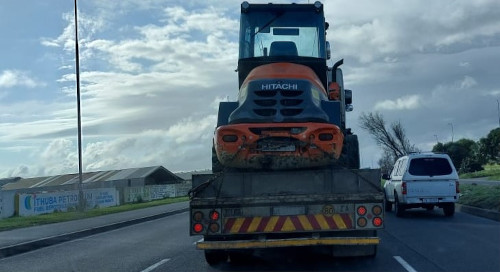
Even Earthworks machinery are fitted with OBD-II so that exhaust emissions can be controlled but when there is a problem in the OBD-II system, invariable these machines would have to go on a roll back and taken for repair.


vw polo fault codes list, vw polo power steering failure, epc light vw polo loss of power, vw polo power steering not working, vw polo epc light and loss of power, vw polo power steering reset, vw polo engine management light loss of power, vw polo limp mode, vw polo 1.4 engine problems, vw polo limp mode, epc vw polo, vw polo common faults, vw login codes, vw polo door lock problem, vw polo throttle body problems, vw 01044, vw polo fuel pump problems, vw polo power steering fuse location, vw polo power steering pump problem, volkswagen polo fuel pump problem, epc light vw polo, vw polo central locking problems, epc polo, vw polo accelerator problems, vw polo power steering sensor location, vw polo error codes, vw polo epc, polo power steering not working, vw relay numbers, vw polo epc light, Accelerator Pedal Position Sensor 2 G185, Accelerator Position Sensor G79, Volkswagen, vw polo fault codes list, vw polo power steering failure, epc light vw polo loss of power, vw polo power steering not working, vw polo epc light and loss of power, vw polo power steering reset, vw polo engine management light loss of power, vw polo limp mode, vw polo 1.4 engine problems, vw polo limp mode, epc vw polo, vw polo common faults, vw login codes, vw polo door lock problem, vw polo throttle body problems, vw 01044, vw polo fuel pump problems, vw polo power steering fuse location, vw polo power steering pump problem, volkswagen polo fuel pump problem, epc light vw polo, vw polo central locking problems, epc polo, vw polo accelerator problems, vw polo power steering sensor location, vw polo error codes, vw polo epc, polo power steering not working, vw relay numbers, vw polo epc light, Accelerator Pedal Position Sensor 2 G185, Accelerator Position Sensor G79, Volkswagen, DTC, On Board Diagnostic, Body Codes, Bluetooth OBDII Scanner, vehicle diagnostics, OBD2,OBD-II, CAN bus, OBD2 parameter IDs (PID), OBD2 scanner, Diagnostic Trouble Codes (DTCs), 16 pin OBD2 connector, DLC, ISO 11898, SAE J1962, OBD3/OBD-III, CAN logger, B codes, WiFi, OBD2 frames, IoT logger, OBD2 Data, OBD2 blackbox, Scanner, Network Codes, Diagnostic tools, Code Reader,Mobile Car Diagnostics,OBD-11 Scanner,OBD dongle, J1939, diagnostics,universal codes,Diagnostic trouble codes,Check Engine Light, P codes, C codes, ISO 15765, U codes, car diagnostic tests, CPU,OBD Cables, Diagnostic cables, Key programming, fuel management system,engine control unit, EPC light, limp mode