Tuesday, September 4, 2018

Volkswagen_Polo

Volkswagen_Polo

During the winter of 2018, the Western Cape hasn't received a similar volume of rainfall as it did in previous years, thus draining its reservoirs to its last 10%. So, due to water scarcity a drought alert  was raised, along with the price of water. Water restrictions were implemented, water was denied, rain water was caught in Jojo tanks by many. Grey water became a buzz word and people lined up at the aquifers to collect drinking water.  In a nutshell we had a water crises and much like the price of water, the price of fuel in South Africa is also staggering.

Staggering isn't perhaps the most appropriate word  to use in this case because in essence, staggering  implies stumbling, almost falling rather than constantly rising. So I'm going to resort to words like astonishing, outrageous even scandalous. Yet this hasn't impeded car sales in the very least because cars are being sold in huge numbers monthly, despite the economic situation in SA. Not to mention that President Zuma was impeached and removed from office causing both Moody's and S&P to downgrade South Africa's foreign and local currency to junk status. Then there is also South Africa's unemployment rate that borders on 27%, followed by its  crime statistics that has somewhat decreased by 1.8% comparative to 2015/16, inclusive of vehicle theft.

Meanwhile the VW Polo reigns supreme, as the most popular and best-selling passenger  car in South Africa, closely followed in second place by its cousin,  the Polo Vivo.  The Toyota Corolla, Auris and Quest sales comes in third place, closely followed by its cousin the Etios that took sixth place.  Then there is the Kia Picanto followed by the Renault Kwid followed by the Hyundai Creta. 


The importance of this observation is that all these cars are smaller  than the average medium sized family car. The expectancy is that being smaller, they would also be more fuel efficient but that's certainly not the case. It turns out that the Ford Fiesta 1.5 TDCi Trend, the the Fiat Tipo 1.3 Multijet Easy, Fiat 500, the Peugeot 2008 1.6 HDi Active and the Fiat Panda 0.9 TwinAir Easy are the most fuel efficient smaller cars on the road respectively. But their fuel efficiency is liked to impeded functionality, cramped seating with hardly any boot space.

Why Buy VW Polo

People buy VW Polo's for its sophisticated look and feel, its overall build quality and its youthful appeal, its comfortable seating and its lavish boot space. Polo also delivers superior performance and is more pleasing to drive. They are affordable both new and second-hand and cheap to insure. The Volkswagen Polo brand has been around since 1975 and is now in its seventh generation and is also sold as the Skoda Fabia and the SEAT Ibiza. 

It just makes economic sense to drive and own a VW Polo because its spare parts both used and new are in abundance. The Polo TDI BlueMotion takes fuel efficiency to a new level and is one of the most fuel-efficient non-hybrid cars in SA, employing the same 1,0-litre turbo triple as the Audi A1. Beside VW offers a three-year, 60,000-mile warranty as standard on every Polo. Though not as fuel efficient as the match-box Fiats mentioned above.

So, considering the ever rising price of fuel, its just a matter of time before every household would want to store some in Jojo tanks underground to get a reprieve from paying  these outrageous and scandalous fuel prices. If you want a fuel price alert when it increased .... and possible decreases, click here!

Friday, August 10, 2018

What is Limp Mode

What is Limp Mode


Limp mode is a safety feature specifically designed into the OBDII system to protect the engine and or transmission from damage. In the event of a engine malfunction or in response to the "warning" lights,  the driver would be provided with advanced warning giving him or her sufficient time to get the car off the road. 

This safety feature is triggered when an abnormality is detected with the logic circuitry by the vehicle's computer, viz  Engine Control Unit (ECU) aka Electronic Cobtrol Module (ECM) or even the Transmission Control Module (TCM). Theoretically these modules receive constant signals from the MAF, MAP, TPS, vehicle speed sensor, cam position sensors, engine sensor and so many other sensors. As long as these signals that stay within the “normal” range of predetermined signal levels, all's well. Since operating conditions do change as the vehicle is driven, these signals will somewhat change and may occasionally exceed or drop below the pre-programmed level.

This event alerts the ECU/ECM to the glitch and gets stored as information. This glitch condition is them monitored by the ECU/ECM for the next few driving cycles. A driving cycle is any distance traveled between the start of the engine and swtching the engine off. It this glitch occurs a few more times during sucessive driving cycles it is registered as an error code in the ECU/ECM's non volitile memory. However if the glitch doesn't reoccure during sucessive driving cycles, that glitch is deleted.

Sometimes the yellow check engine would turn on, though the car drives and performs perfectly normal. After a few cycles the yellow check engine light then turns off as if the event never occurred.  Sometimes the glitch like  a misfire occurs and could be severe enough the trigger Limp Home Mode. Limp home mode is an operating condition that is triggered by the vehicle ECU. In the case of an automatic vehicle, limp mode will limit the transmission to 2nd gear and limiting the speed to 15 to 20kms p/hour. This may cause the engine to have a higher rev than you may be accustomed to hearing. This will also cause the vehicle to be sluggish on pill away since it is limited to 2nd gear and will not change.

Once the problem / error code is diagnosed and the appropriate sensor that's causing the problem is seen to or replaced, everything should be back to normal.

Thursday, August 9, 2018

Fail Safe Mode

Fail Safe Mode

"Fail Safe Mode" aka "Limp Mode"  is becoming more common as the guarantees on cars of all makes and models are starting to expire. As cars are getting older, they also tend to be affected by fail safe more frequent than ever before. In fact now a days, its quite difficult to find a car fitted with OBDII that hasn't gone into "fail safe mode" or "limp mode" at some time or the other,

"Limp mode" is normally instantly identifiable and have a number of symptoms. These symptoms range from the car's engine switching off in mid travel, the engine idling but its won't rev, the car performing sluggish on take off, or in automatic models, the transmission doesn't seem to want to shift. These are often accompanied by a flashing or permanently on check engine light or transmission light and the EPC light. When this happens to you, its best to get your car to the side of the road and out of harms way as quickly as possible. I've experience limp mode several times with my VW Polo 9N and one of them stands out as a near death experience when I just about managed to limp my car away an fast on coming pantechnicon truck, before it could hit me. 

Since VW is known to have cheated on VW vehicle test, namely the during diesel scandal, there's an idea that's been making its rounds on social media, claiming that "limp mode" was engineered by Volkswagen AG as a way of making money from all VW owners when their vehicles start to misbehave. However, this is a myth or rather it's not exactly true because "limp mode"  doesn't just affect Volkswagen manufactured cars but seems to be more prevalent on Honda,Toyota, Dodge and Chrysler vehicles with a computer controlled transmission, though not specifically.


Transmission Limp Mode

Automatic Transmission are plagued by both electrical and mechanical issues because  the  Transmission Control Module  (TCM) controls the process of shifting gear;  and because it's  located inside the rear end of the transmission itself, constantly subjected to extreme heat from the transmission oil. As such, the ribbon cable inside the becomes hard and brittle and sheds their PVC covering causing connections to short circuit or cause sensors to malfunction.

Both the Transmission Control Module (TCM) and the  Engine Control Module (ECM) depend on a stable 12 volts supply  to operate properly. So by implication, a faulty alternator can give rise to a low batteries or even dirty battery cables can cause  intermittent power issues, causing these modules not to function optimally, resulting in "Limp Mode".

When faced with a "Transmission Limp Mode" it is worth trying to perform an Adaptive learning Procedure before limping it to the service agents. This will hopefully reset the TCM and eradicate the problem. So turn on the ignition to the position where all the dashboard light are lit. But don't start the engine. Then depress the accelerator pedal all the way in, and keep it there for 1 minute and while keeping the pedal depressed turn the ignition off. Release the accelerator pedal and wait for another minute then start the car. 

Saturday, June 23, 2018

Russian Autotech

Russian Autotech

Greetings fellow Volkswagen owners. I'm certain most of you will agree with me that as huge as the Internet is, it's often hard or rather difficult to find exactly what you looking for. More often than not, this pertains to information  on automobiles of every kind but especially VW, Audi, SEAT and Skoda vehicles. Be this as it may, it certainly doesn't mean that these sought after help files or information even exist; though several "mechanical services web sites" allege that they have all the answers to you motoring problems, offering said information on a paid subscription basis. In reality, there is absolutely no guarantee that they actually have the answers you need to fix your Volkswagen,  Audi,  Skoda or SEAT. The worst would be after subscribing, that this is in fact the case. 


To make matters worse, since the diesel-gate scandal, Volkswagen AG hasn't been forthcoming with information needed by the general public in order to fix or maintain their Volkswagen, Audi, SEAT and Skoda vehicles. They've been far too busy dealing with the fallout of the "diesel dupe". In the US alone, Volkswagen has already paid over €25 billion in fines and litigation costs. Regardless of this, the Dieselgate scandal doesn't look like it's going to abate anytime soon. 

Notwithstanding, this hasn't deterred Volkswagen from extending a €1.75 billion deal with Russia's GAZ group until the year 2025, to produce VW, Audi and Skoda brand vehicles at their Gorky plant in Nizhny Novgorod Oblast, despite the collapse of the Russian ruble. Meanwhile the Kaluga plant in Russia continues to produce VW Tiguan, VW Polo and Skoda Rapid models, as well as build 1.6L gasoline engines. Russia has long been touted to become the largest single car market in Europe, eclipsing Germany’s 3.35 million new vehicles registered last year though currently, many Russians can't afford to buy new cars. 


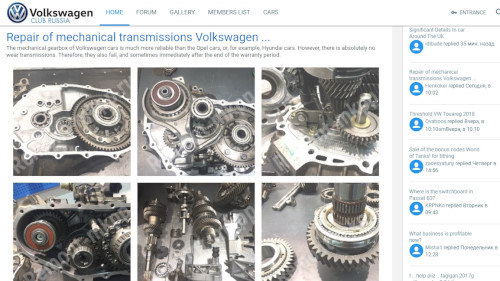
The most significant thing about this operation, is that several thousands of  Russians were empowered by VW and Audi and privy to their technology, to the point that they are willing to share it with whoever is willing to ask. So, all you peeps  who are having trouble with your VW's, Audi's, Skoda's and SEAT's and seek repair information, there are several Russian Websites that have hoards of free VW, Audi, SEAT and Skoda information that is not normally available on English / American websites. Below are a few links to Russian Websites that may have the information you are looking for. The images in this post are screen shots from these websites. Best of luck with your repairs.


The first site is  http://vwts.ru/  .... this is a Volkswagen Technical Site. All information is in Russian. Login to http://vwts.ru with your facebook account. If your Russian, like mine, extends to yes and no - "да (da) and (нет) net" respectively, then its best  to download  Google chrome's translation extension in order to make sense of the documentation. Some of the documents are in PDF format, mostly in  Russian and German but I've downloaded several written in English. This site also has a forum vwts.ru/forum/  but it appears to be insecure.


http://volkswagen-org.ru/ ... this site covers Golf 1 - Golf VI, Volkswagen Polo, VW jetta, VW Passat, VW Phaeton, VW Tiguan, VW Touran etc. It seems that its administrator has locked down new registrations, but if you manage to login, do so with the facebook icon.

https://www.vw-bus.ru .... this is a forum covering the VW combi T1 - T5, the LT, crafter, the VW Caddy and the Amarok, with members living in Russia, Belarus, Ukraine, Kazakstan, Baltic States and Europe.

https://www.drive2.ru/   ... this is a site of general interest but has good coverage of VW, Audi, Skoda and SEAT.


Thursday, November 9, 2017

Check Engine Light

Check Engine Light - aka MIL

Yesterday morning when I started my VW Polo highline she idled a bit rough but I never gave it another thought because it had been raining hard throughout the night with harsh howling winds accompanied by a  lightning storm. I summized it could have been caused by the moisture in the air but when I looked at the dashboard, I saw that the orange / amber Check Engine Light was on. I tried accelerating and looked at the CEL but it stayed on. Surprisingly the engine seemed sluggish and didn't revv as per normal. Looking through the rear view mirror, I could see a distinct amount of smoke spiraling behind the car.  This was worrying because the previous day,  the car drove perfectly normal and when I parked her, she idled just fine. 

The problem with the  Check Engine light, other that being on, is that it doesn't tell you anything about the nature of the problem nor whether it's  serious or not. All I knew is that something was wrong with my emission control system because of the excessive  smoke.   The Check Engine light is actually better known as the Malfunction Indicator Lamp (MIL) so in essence there was a malfunction detected by the ECU and there was no way to tell what it could be without plugging in my scan tool. So off I went and  fetched my laptop and my VCDS cable, plugged it into the under dash DLC connector and ran a scan and found 4 Faults - P1137, P1103, P1187, and a P0441.

CODE ERRORS

17545 - Fuel Trim: Bank 1 (Add)
P1137 - 002 - System too Rich - MIL ON

Considering the first error code describes the fuel system as to rich, by implication then there is too little air for proper combustion. So I popped the bonnet to check the MAF, and saw a whole load of leaves and pine nettles strewn all over the engine compartment and a hand full of them stuck to the inlet of the air filter, blocking the air flow. I then open the air filter, removed the leaves and nettles and all those that got sucked into the air filter housing when I initially started the car.

17595 - Linear O2 Sensor; Compensation Resistor: Open Circuit
P1187 -- 35-10 - - - Intermittent

The second error directed me to the O2 sensor because the ECU describes it as  "Open Circuit".  Stooping over the engine, my eye followed the exhaust pipe, from the manifold branch past the firewall and saw a pine tree branch under the car, so I kneeled down to pulled it out but is was stuck. The tree branch was right below the  Catalytic converter.  I then went inside to fetch a garden pruning scissors so that I could cut off the protruding twigs and free the branch. Just as I was cutting I saw a wire hanging from down from the Cat. It was the wire from the O2 sensor that broke off and I supposed this happened with the force of the wind blowing the branch under my Polo.

The road and my driveway was littered with pine comes and nettles that the wind blew from the park more than a 100 meters away.  Anyway, I striped of the O2 sensor wires which was screened and reconnected them with an electrical block connector. You know the ones were you have to push the wires into a brass ferrule from either end and screw it down with the two screws. That just worked perfectly.

17511 - Oxygen (Lambda) Sensor Heating; B1 S1: Performance too Low
P1103 - 35-10 - - - Intermittent

The third error also directed me to the O2 sensor that wasn't heating up. I suppose it's linked to the disconnected wire and I assume the ECU prevented this because it realized the O2 sensor was OC. 

16825 - EVAP Emission Control Sys: Incorrect Flow
P0441 - 35-10 - - - Intermittent

The fourth error I couldn't make sense of  though I've seen this error when the fuel tank cap wasn't properly closed. So I went to the the tank, took off the cap and inspected the rubber seal. But it all seemed fine, so I closed it. I them cleared the diagnostic trouble codes (DTC) stored in the engine control module and started and re-scanned the ECU for errors and it came back with "No fault code found ". I then started my Polo and all was well. She revved as before and the Check Engine light was off.


The Check Engine light has always been a major annoyance to both motorists and mechanics,  and as a consequence is often ignored. I even know of someone  who stuck a piece of black insulation tape over the orange / amber  Check Engine light to blot it out, rather than fix the problem. Be that as it may,  ignoring the Check Engine light could lead to expensive car trouble later, so it's important to promptly address problems indicated by it.

DIY mechanics should buy and inexpensive scan tool / DTC code reader  since they are all standardized to plug into the 16 pin DLC under the dashboard. It would empower them to  discuss the problem with their mechanic if they can't manage to solve it themselves. When Check Engine light comes on, it is more likely than not that your car car is releasing unburnt gasoline (hydrocarbons) and carbon monoxide  into the atmosphere and consume a lot more fuel than it actually should.  

The OBDII system was primarily designed to monitor the emission control system continuously so it can be said hat if you car passes "readiness" its a good indication that your car  engine is in good health.  

Some problems that can illuminate the Check engine Light.

A clogged air filter can trigger the Check Engine light.
A loose gas cap can trigger the Check Engine light.
A fault O2 sensor can trigger the Check Engine light.
A Mass air flow sensor problem can trigger the Check Engine light.
Perished Spark plug wires can trigger the Check Engine light.
A blown  Catalytic converter can trigger the Check Engine light.
Low oil pressure or overheating can trigger the Check Engine light.
Sporadic engine misfiring can trigger the Check Engine light.


Tuesday, November 7, 2017

Hall Sensors

VW POLO

Volkswagen has always had an upstanding reputation (other than for the emission scandal) for manufacturing quality vehicles at affordable prices. One such car is the VW Polo hatchback which has also become one of the most popular cars in South Africa, and it’s really not hard to see why. The VW Polo is a compact car, but when driving it, it somehow feels larger, somewhat like its bigger brother - VW Golf. Should you buy one, you would certainly agree that the VW Polo has universal design appeal, that it has good performance, decent fuel economy and is sold at a relatively affordable price. 

Hall Sensor Hall Effect Sensor Switches A3144 / 3144E / OH3144E
in a TO-92UA 3 pin SIP package can be bought for as little as 1 USD
Volkswagen has capitalize on this winning formula for years and has given us plethora of Polo's to choose from ranging from the Polo Trendline, to the Polo Comfortline, to the Polo Highline, not forgetting the Polo Cross and Polo GTI which comes in 3 and 5 doors classic and hatchback versions. Engine capacities and engine technologies range from 1.2 TSI 66kW and 1.4 TDI 55 kW for the Trendline,   1.4 TDI 77 kW, 1.2 TSI 81kW for the Highline  and 1.2 TSI 81kW Highline DSG, to  1.0 TSI 70 kW BlueMotion. The sedan or VW Polo Classic comes in  1.4 & 1.6 trendline, 1.6 comfortline / tiptronic, 1.9 tdi highline (74kw)  and 2.0 highline (85kW).  There is even a GTI (Grand Touring Injection), a FSI (Fuel Stratified Injection), TSI (Turbo Stratified Injection) and a TDI (Turbocharged Direct Injection), to choose from. 

Clearly there's a Polo out there waiting for you! Having said that, owning a Volkswagen doesn't come without challenges, personally I think the biggest challenge is more likely than not the dreaded EPC light that triggers at the most inopportune times. The EPC circuit has several sensors that feeds into the ECU among them Hall sensors. From my experience hall sensors tend not to like heat, even though their specification sheets rates them above the requisite heat range.  
This datasheet gives you a good idea of a hall sensor's specifications 


Hall sensors are pervasive throughout modern day cars. Hall sensor, aka Magnetic sensors essentially converts magnetic pulses into electrical input signals for processing by electronic circuits. Magnetic sensors are solid state devices meaning there are no mechanical moving parts inside, its all electronics taking place in a sealed chip of silicon, making them immune to vibration, dust and water. This makes them popular choice by electronics designer engineers for several types of application ranging from  distance sensing, to velocity sensing, to position sensing, to  speed sensing, to directional movement sensing etc.

Hall sensors are used for angular position sensing of the crankshaft to determine the firing angle of the spark plugs. They are used for magnetic position sensing in EGR systems. They are used for wheel speed detection for the anti-lock braking system - (ABS) and speedometer. Throttle bodies with DC motors use hall sensors for position sensing. Hall sensors are also used to determine the position of the car seats and locking of seat belts. Hall sensors are employed in automatic transmissions as magnetic neutral position switch, as actuator sensors, as speed and direction sensors, for gear detection and clutch position sensing. Hall sensors are used as engine speed sensor and also as the vehicle speed sensors.  And the list goes on.

The following images depicts a hall sensor replacement inside the distributor of and Audi 5-cylinder engines 2.0 - 2.3. As can be seen the the wires have distinct colours , the red wire is +5V / 12V supply, the black wire is negative / ground and the yellow wire is the output of the hall sensor / sender.

There is space under the black plastic holder where the wires connect to the hall sensor.

Multi purpose hall sensor for automotive use, but the military spec hall sensor is a better option
The sensor is replaced, solder joints covered with fiber glass sleeving then epoxied into place.
Hall sensor plate reassembled
Hall sensor assembly fitted into distributor housing

As I mentioned in a previous blog, Hall sensors don't like heat and tend to malfunction when they get too hot. My first experience with hall sensors were when I was working as an electronics engineer for A Television and Video repair company. A video machines that employed a hall sensor in its take up clutch stopped working due to overheating.  By squirting the hall sensor with a blast of servisol rapid cooling spray, it started working again. I repeated this exercise a few times to make certain that the hall sensor was the culprit, after replacing it, the machine worked just fine. 

Then I also had a problem with my Opel Kadett 1.8 GSI  when driving in peak hour traffic. It would switched off and refused to start.  But after allowing the engine to cool, it started just fine and would be perfectly ok for days until I got stuck in bumper to bumper peak hour traffic again. The dealer had a field day with my car, telling me that they repaired a bad earth under the dash board, only to find out in peak hour traffic that they misdiagnosed. Then I was told that the loom was replaced, then I was told the ECU was replaced and finally that a hall sensor inside the distributor was replaced. This fix the problem once and for all. The images above is for the same symptoms on a Audi  2.0L 5 cylinder.  As perfect as hall sensors are for most applications, where there is excessive heat, they will misbehave.  Perhaps hall sensors mounted in heat intensive spots like the engine speed sensor, should be designed with a heatsink or have its own cooling fan. This advice is as relevant for current model cars as it was for the Audi 2.0L 5 cylinder.

Sunday, November 5, 2017

Volkswagen Polo

Volkswagen Polo

The Volkswagen Polo Vivo is undoubtedlty the most popular, as well as the  best-selling car is South Africa. Looking at the top ten vehicles sold in South Africa, VW Polo Vivo takes first place, the Volkswagen Polo takes third place and the Vw Golf takes tenth place. Looking at the frequency of problems encountered with Volkswagen vehicles  in general, it appears that the VW Polo 2002-2009 models are far more reliable than the VW Polo 2010—2016 models. These models are prone to EPC problems and several Polo owners have complained that they encountered EPC problem with their cars with as little as 700km on their clocks.

The most troublesome generation 5, VW Polo seem to be the 2011 model, but the 2012 model takes the cake for the annoying knocking sounds coming from the suspension when going over speed bumps and pot holes.  But this knocking sound isn't unique to the Polo 2011 and 2012 models, it also affects the Golf Mark 7, the Volkswagen Transporter T5 and Polo GTI, etc.


It seems that somehow the strut mount bolts in the engine bay of these Volkswagens haven't been torqued properly. The rattling and knocking noise coming from the shocks occurs when driving over pot holes  or over speed humps, especially when the shock is fully extended or when driving slow.  In some cases the noise comes from coil-over assembly. These coil-overs squeek and creak at random and sometimes the rear ones squeak worse than the front ones. We found by removing the damper adjustment knob and tightening the 17 mm nut in the middle of your strut top,  and   holding the centre with a 7 mm allen key,  the noise is  somewhat reduced but is very disconcerting since these models are relatively new cars. 


Its probably best to re-torque these nut between 45-60 ft/lbs with a correctly  calibrated torque wrench. In my opinion there should have been a total recall on VW Polo 2010—2016 models for this problem.